

I have not failed. I’ve just found 10,000 ways that won’t work. -Thomas Edison
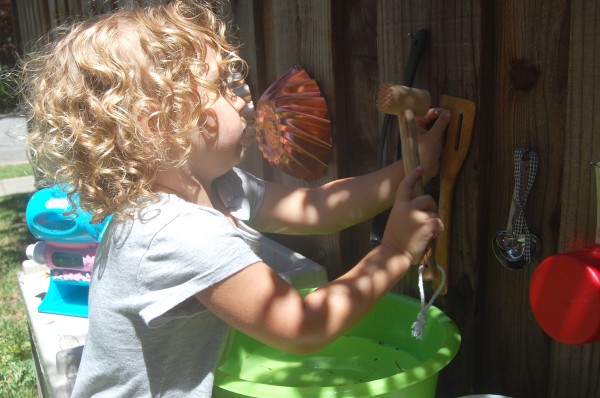
What is Tinkering?
Tinkerer: one who experiments with materials and ideas to fully understand their capacities, and who further iterates on their learning to find better solutions to current problems.
Last week I wrote an article called What is Tinkering?, and you may enjoy taking a peek back to read it.
In its classic sense, tinkering is about puttering around with electronics or machines, but in this more up-to-date definition, tinkering is about playing with materials and figuring out how just about anything can be assembled.
Tinkering is about hands-on experiences, learning from failures, and unstructured time to explore and invent. And through the processes of exploration and invention lies the potential for innovation.
Why is tinkering so important and why should we care?
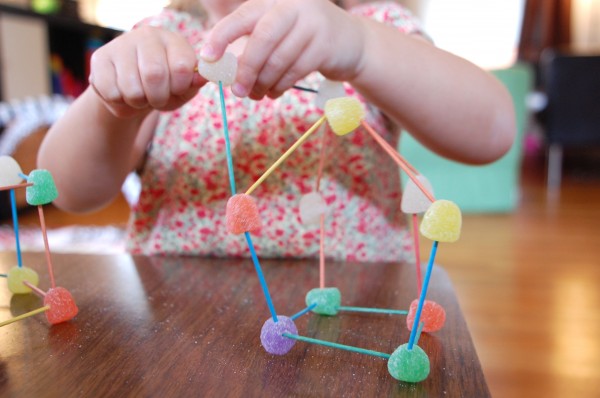
Tinkering is important because it can help children understand how things are made, enables children to have focussed and unstructured time to explore and test ideas, and it’s at the heart of invention.
Think of Thomas Edison as a classic example.
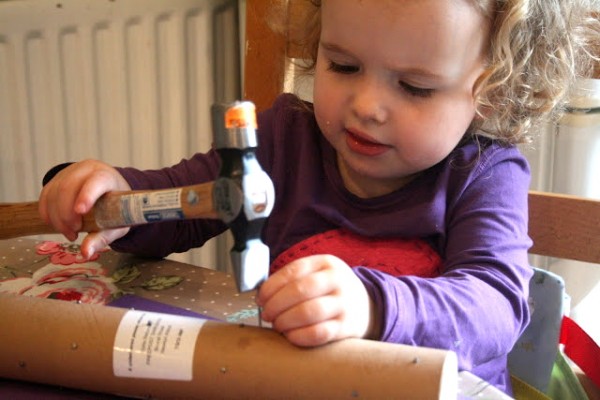
Edison may be best known as one of the most prolific inventors in history. He’s responsible for the first light bulb, stock ticker, electrical power, and motion pictures.
And do you know how it all began?
Edison had a rough childhood. Due to illness, he started school late at the age of eight and was deemed unfit for education by the schoolmaster. Hard to believe, right? His mother chose to homeschool her son, where he learned at a much higher level than he would have been at in school.
At age ten, Edison built a chemical lab in his cellar. Soon thereafter, he was obliged to take a job selling sweets and newspapers on a train. He found an opportunity in what could have been drudgery, and built another laboratory for himself in the back of the train (very industrious and tenacious of this young boy!). In this train job, he further learned morse code and became a proficient telegraph operator.
Overall, he learned how things work together, he was a resourceful self-starter, and he created opportunities to test his ideas from a very young age.
The world has changed a lot since Edison, but opportunities for tinkering and invention still abound! So I pose this question as something that we can unpack together:
What can we do to give our children opportunities to think like Edison?
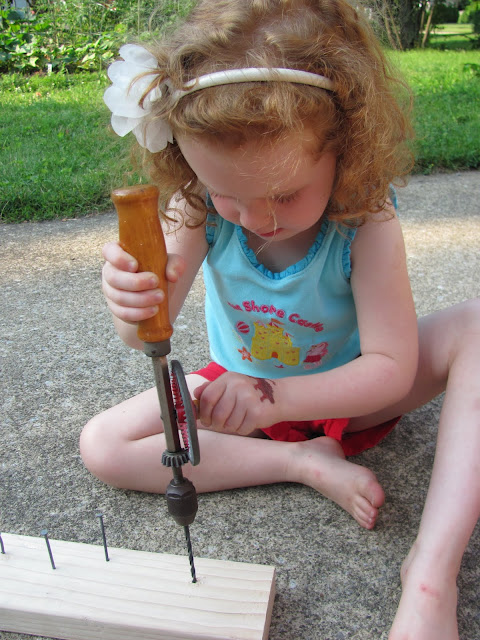
Raising a maker-kid doesn’t mean we have to outfit our homes or classrooms with high tech equipment or tools that our outside of our budget or comfort zone. Think back to Edison who was motivated to build a lab in his basement. What we CAN do is provide our children with opportunities to explore materials, take things apart, and imagine new possibilities through the process of invention. And this can be done simply by providing them with low-cost materials and time to tinker.
We’re entering a new era of invention and innovation, and if we want our kids to be prepared for this DIY movement, now is the time to provide them with cardboard boxes, rolls of tape, tools, and a lot of free time to explore and experiment.
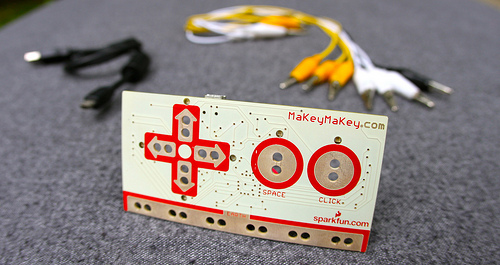
In addition, we’re fortunate to live in a time where hacking and a DIY spirit are in full swing. Open-hardware invention kits like MaKey MaKey (above), magazines like MAKE and its related hacker-art festival, Maker Faire, open-source software, maker camps such Camp 510, and websites like Instructables make this an exciting time to be a tinkering maker-kid.
Tinker with…
I hope you’ll join me tomorrow for the unveiling of our first “Tinker With” challenge.
Special thanks to The Chocolate Muffin Tree, The Imagination Tree, and for sharing tinkering images with me.
What a fantastic approach! I love letting kids get their hands dirty with lots of different activities. It gives them the confidence they need to try things out and it helps them build a real understanding of the way the world works. I’m definitely keeping in touch with this blog…
Can’t wait!
Wonderful post! How else could great discoveries be made? Whenever my kids made “mistakes” in art, I tried to make them understand that these were actually wonderful opportunities to see things differently or to take another direction, rather than letting it get you down. Not always easy when you’re dealing with little ones though!
Those pictures speak volumes! what an inspiring post!
Thanks for sharing about Edison. What an amazing person.
Childhood is such a special time to develop skills and thinking routines for tinkering and problem solving. I think it has become all too easy for families to become toy and technology rich and tinker poor.
Looking forward to your ideas! We made the water wall you featured and it has been the hit of the neighborhood!
Great post!
Plus did you know that Edison had severe Learning Disablities, not just Dyslexia either.
I am studying my diploma in childcare have just found so many interesting activities for my children at the Centre I work at . I am looking forward to share your ideas
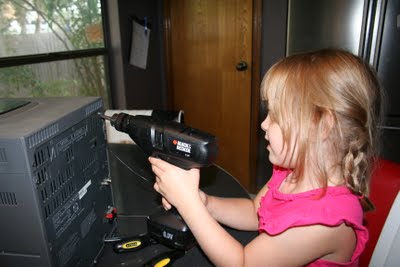
I’m glad you added a photo of a child DISassembling something! My son was known as el destructo at our house because he loved to see what was inside. If only I’d had the foresight back then (about 30 years ago) to give him some old stuff to take apart. 🙁 Making up for it with the children in my care now, though. Thanks for your great ideas and daily tinkering questions!
[…] Now that we’ve covered the basics of tinkering, click here to read about why tinkering is important. […]
[…] might not know this but tinkering and creating are HUGELY important for kids and their development. Studies show that the more kids tinker, the […]